
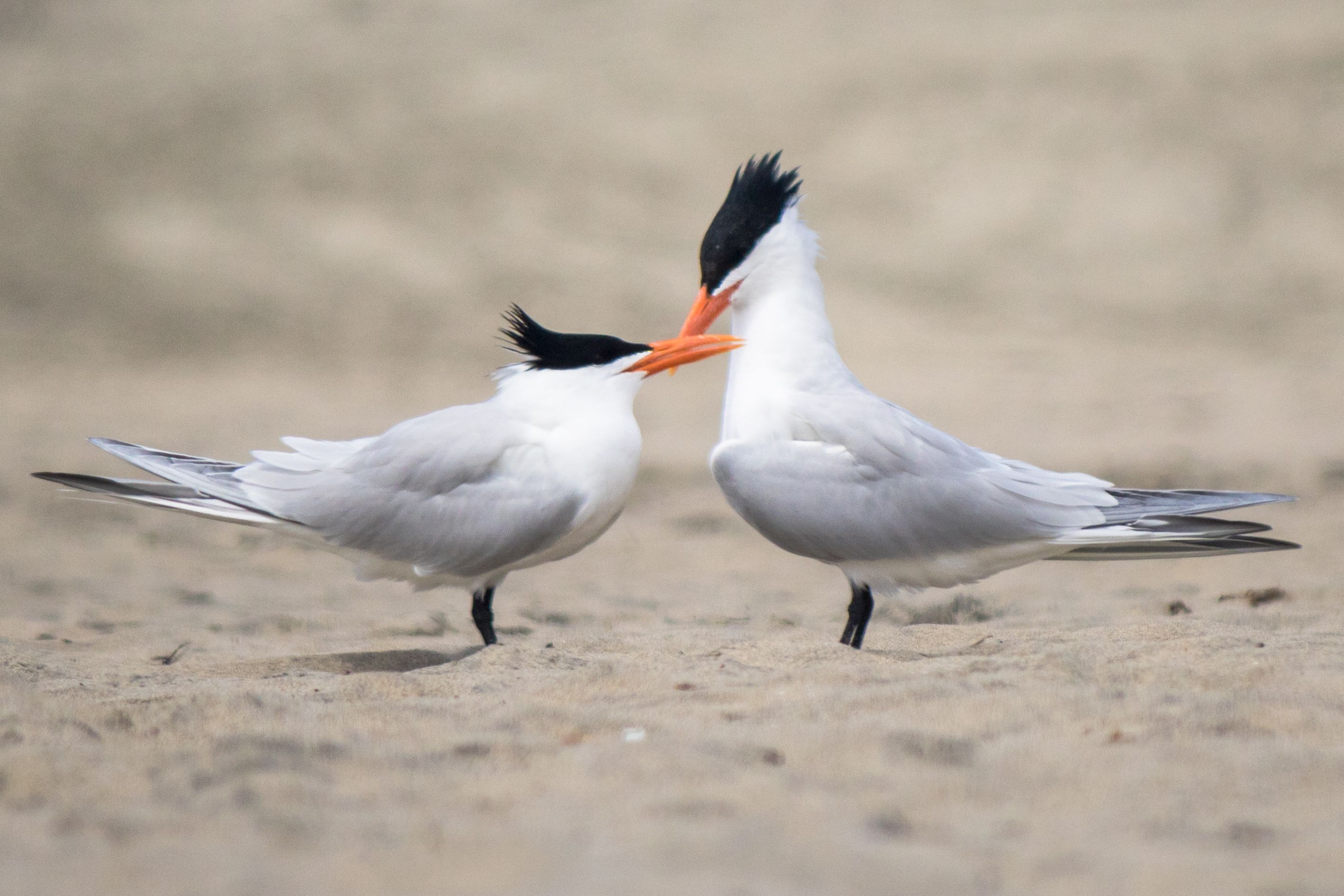
Elegant Terns in Coronado by Maya Akpinar
City Officials have promised organizers and wildlife advocates: from now on the San Diego Bayfair will be moved outside the nesting season to protect nesting birds. The noise, crowds and thunderboats will not happen during the California Least Tern nesting season anymore.
The San Diego Bird Alliance and partners are making progress in efforts to ensure nesting birds in Mission Bay have a safe place to raise their young. Since 1993, the Bird Alliance has maintained and monitored critical nesting sites for the endangered California Least Tern (CLTE) in the busy bay. In the City of San Diego, this means from April 15th to September 15th the sites are closed to the public, buffer areas are in effect, and ongoing monitoring and predator control is conducted. Many protections that are in place for this endangered species also helps protect other birds that nest and rest in Mission Bay.
During Covid, Elegant Terns decided West Ski Island, the horseshoe-shaped island in Fiesta Bay, was an appropriate habitat for their nesting, and began nesting yearly in increasing numbers, with more than 15,000 terns in 2024. As a Multiple Species Conservation Plan protected species, these birds have the right to be protected from human disturbance during nesting season. However, without adaptive management practices in place, municipalities and agencies can only act so fast when ground conditions change. The Elegant Tern would benefit from the existing CLTE nesting closure if it were enforced for West Ski Island, too. However, in 2024 the San Diego Bayfair event, which has taken place in Mission Bay for 60 years, was scheduled to occur before the end of the nesting season closure, putting young fledglings at risk of collisions or drowning, as we saw during fireworks in 2024.
After public outcry and a tumultuous nesting season, Council President Joe LaCava and Mayor Todd Gloria have now directed City Staff to ensure that the Bayfair event does not overlap with the long-established nesting season going forward. This commitment to protecting natural resources in Mission Bay and reaffirming protections is a promising move to ensure species can bounce back and survive anthropogenic pressure. On the heels of passing a ReWild land use plan that includes over 140 acres of new wetland habitat, the City is taking another step to ensure Mission Bay can still be home to these endangered species–there’s plenty of time and space for our Mission Bay celebrations, and pushing this event back one week helps improve the nesting success of these birds.
